
AI Could Finish Desk Jobs Sooner Than We Think — Microsoft’s Warning
Artificial intelligence is no longer a distant disruptor. It’s here, embedded in emails, spreadsheets, meetings, and reports — and according to leadership at Microsoft, the transformation of white-collar work may happen far faster than many expect. Recently, Microsoft AI CEO Mustafa Suleyman suggested that most office-based roles could face significant automation within the next 12 to 18 months. His comments have reignited a global debate: Is AI about to finish traditional desk jobs?
2/20/20261 min read
A Rapid Shift in Office Work
AI systems are advancing at an extraordinary pace. Tools powered by large language models can now draft legal briefs, analyze financial statements, write marketing strategies, summarize meetings, generate code, and even assist in complex decision-making. Tasks that once required hours of human effort can now be completed in minutes.
Suleyman’s warning isn’t that every professional will suddenly be unemployed. Rather, it’s that the nature of work is changing dramatically. Roles built primarily around processing information, generating reports, or performing repetitive digital tasks are especially vulnerable.
In many companies, AI tools are already integrated into daily workflows. Employees are expected to collaborate with AI systems — and in some cases, productivity expectations are rising because of it.
Automation vs. Augmentation
There are two competing narratives emerging:
Full automation: AI replaces large portions of white-collar work, reducing the need for many traditional roles.
Augmentation: AI becomes a powerful assistant, allowing workers to focus on strategy, creativity, and human-centered tasks.
The reality will likely be a mix of both. Some tasks will disappear. Some roles will shrink. But new positions — focused on AI oversight, system design, data strategy, and human-AI collaboration — are also expected to grow.
Who Is Most Affected?
Jobs that involve:
Routine analysis
Document drafting
Data processing
Administrative coordination
Standardized reporting
are the most exposed.
Roles requiring:
Complex human judgment
Emotional intelligence
Leadership and negotiation
Creative direction
Ethical decision-making
are currently more resilient.
The Bigger Picture
Technological revolutions have always disrupted labor markets. From the industrial era to the internet age, automation has eliminated certain roles while creating entirely new industries. The difference today is speed. AI development is moving faster than previous technological shifts, compressing what once took decades into just a few years.
For professionals, the key takeaway isn’t panic — it’s preparation. Learning how to use AI tools effectively, building uniquely human skills, and staying adaptable may be the most important career strategies of the next decade.
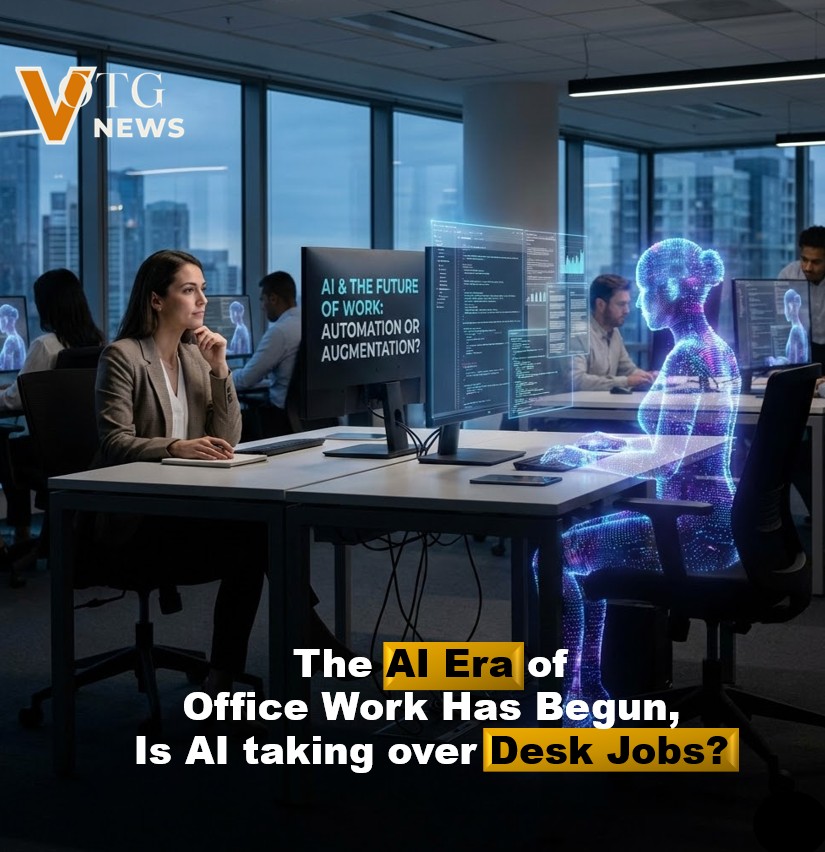
Disclaimer: This update is shared based on publicly available information. VOTG News is not responsible for any decisions made based on this news. The image is AI-generated only for illustration