
Attabad Lake Sees Expanding Sandbanks as Water Levels Recede
Attabad Lake in Hunza is witnessing noticeable environmental changes as expanding sandbanks and dry patches become visible along parts of its shoreline. The development has drawn attention from tourists, local residents, and environmental observers.
6/4/20261 min read
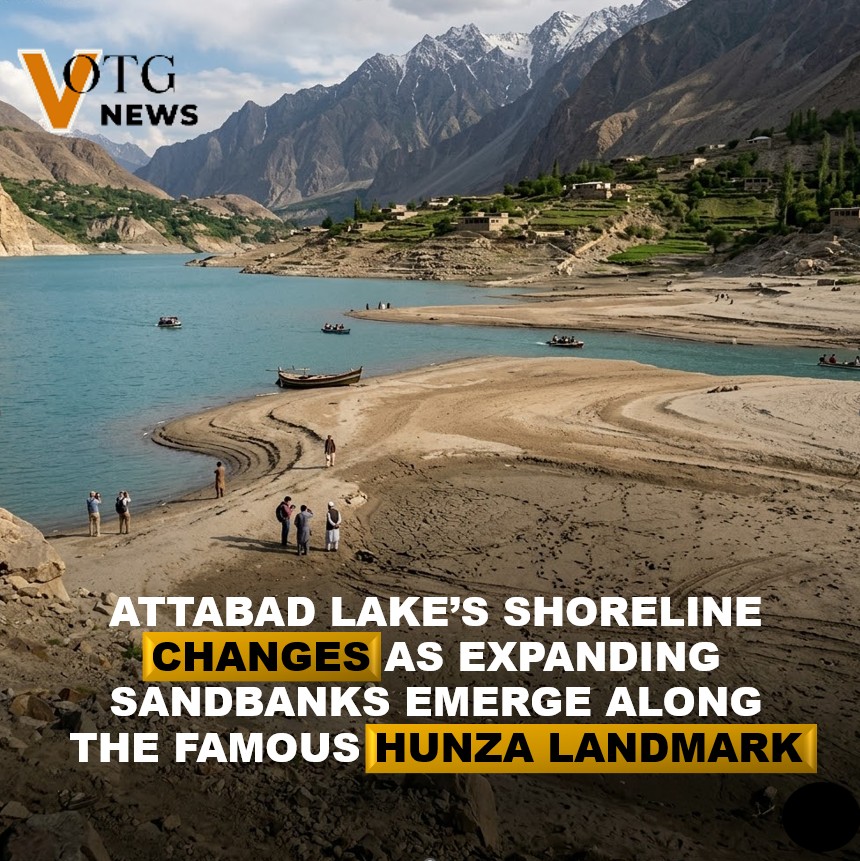
Attabad Lake, one of Pakistan’s most famous natural attractions, is undergoing a visible transformation as areas once covered by water are increasingly being replaced by sand and exposed land along sections of the shoreline.
Visitors and local residents have reported the appearance of larger sandbanks and dry patches, altering the lake’s landscape and raising questions about changing water levels. The lake, known for its turquoise waters and stunning mountain scenery, remains a major tourist destination despite the visible changes.
Environmental experts suggest that seasonal fluctuations, sediment deposits, reduced water inflows, and broader climate-related factors may contribute to shifts in the lake’s appearance. Such changes can naturally occur in mountain lakes, although continued monitoring is important to understand long-term trends.
Tourism operators and community members are closely observing the situation, as Attabad Lake plays a significant role in the region’s tourism industry. Boating activities, sightseeing, and hospitality businesses attract thousands of visitors to Hunza every year.
Experts emphasize the importance of environmental conservation and scientific assessment to better understand the factors influencing water levels and shoreline changes. They also stress the need to protect the region’s unique ecosystem and natural beauty for future generations.
Despite the emergence of sandy areas, Attabad Lake continues to captivate travelers with its breathtaking views and remains one of northern Pakistan’s most iconic landmarks.
The changing landscape serves as a reminder of the dynamic nature of mountain environments and the importance of monitoring environmental changes in fragile ecosystems.
Disclaimer: This update is shared based on publicly available information. VOTG News is not responsible for any decisions made based on this news. The image is AI-generated only for illustration