
China’s Eye-Tracking Wheelchair Technology: A New Era of Mobility for Paralyzed Patients
For millions of people living with paralysis, independent movement remains one of life’s greatest challenges. Traditional wheelchairs often require hand, head, or voice control—options that are not available to everyone. Recent advances from China, however, are opening new possibilities through eye-tracking and brain-computer interface technologies, allowing patients to control wheelchairs simply by looking or thinking.
1/13/20262 min read
How Eye-Tracking Wheelchairs Work
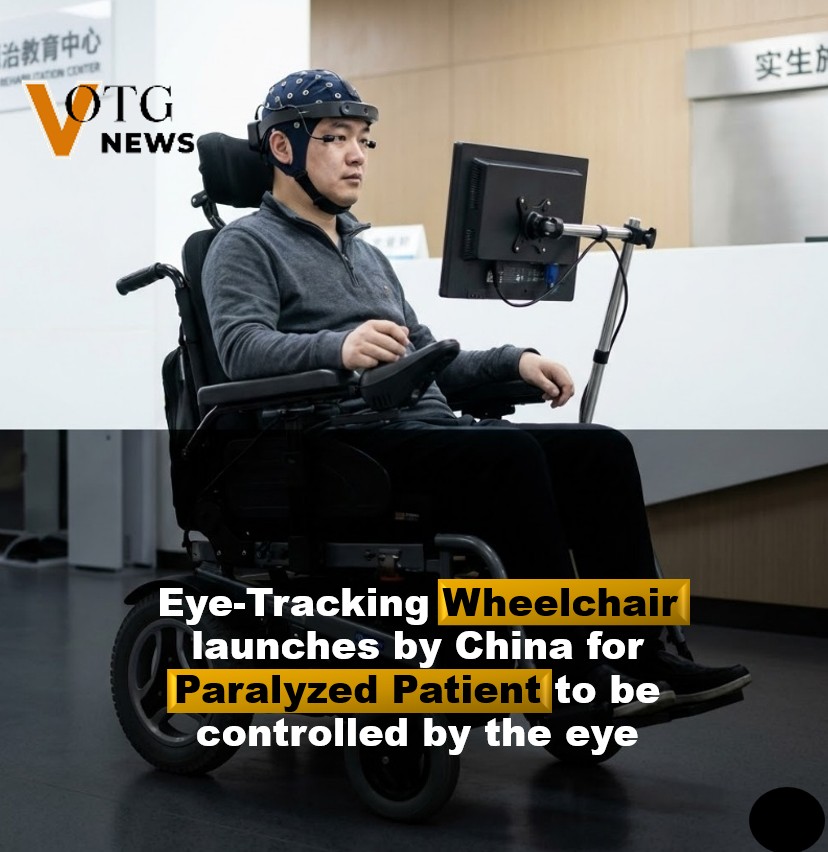
Eye-tracking wheelchairs use high-precision cameras and artificial intelligence to monitor a user’s gaze. By detecting where the user is looking—such as left, right, forward, or at specific on-screen icons—the system translates eye movements into movement commands.
For example:
Looking forward moves the wheelchair ahead
Looking left or right steers
Fixating on an icon can trigger stop, speed, or navigation modes
Because eye movement is often preserved even in advanced paralysis, this approach offers a non-invasive and accessible control method.
Advances Emerging from China
Chinese researchers and engineers have been particularly active in this field, developing both eye-tracking systems and even more advanced brain-computer interface (BCI) wheelchairs.
1. Eye-Tracking Research and Prototypes
Chinese universities and technology labs have contributed to:
High-accuracy gaze detection algorithms
AI-assisted error correction to prevent accidental movements
Lightweight systems that reduce fatigue for long-term use
Some experimental designs focus on affordability and scalability, aiming to make eye-controlled wheelchairs more accessible in hospitals and rehabilitation centers.
2. Self-Powered Eye-Tracking Technology
In a remarkable development, Chinese scientists have also created self-powered eye-tracking devices that can generate energy from natural eye movements such as blinking. While still experimental, this innovation could reduce reliance on external batteries and lead to more compact assistive devices in the future.
Beyond Eye Control: Thought-Controlled Wheelchairs
In parallel, China has made headlines with brain-computer interface wheelchairs. These systems allow users to control movement using neural signals captured by implanted or external sensors.
In early clinical trials:
Paralyzed patients successfully navigated electric wheelchairs
Users controlled robotic devices using only their thoughts
Response times and accuracy showed promising results
While BCI technology is more complex and often invasive, it represents the cutting edge of mobility assistance.
Why This Matters
These technologies are more than technical achievements—they are life-changing tools.
Key benefits include:
Increased independence for patients with severe paralysis
Reduced reliance on caregivers
Improved mental health and quality of life
New rehabilitation and communication possibilities
For individuals who cannot speak or move their limbs, eye-tracking and thought-controlled systems may become their primary way of interacting with the world.
The Road Ahead
While many eye-tracking wheelchairs are still in the research or prototype stage, progress is accelerating. As costs decrease and reliability improves, these systems are expected to move from laboratories into real-world use.
China’s rapid innovation in assistive technology signals a future where disability does not mean immobility, and where advanced human-machine interaction can restore autonomy to those who need it most.
Disclaimer: This update is shared based on publicly available information. VOTG News is not responsible for any decisions made based on this news. The image is AI-generated only for illustration