
Chinese Researchers Develop Robot Capable of Ultra-Precise Eye Injections
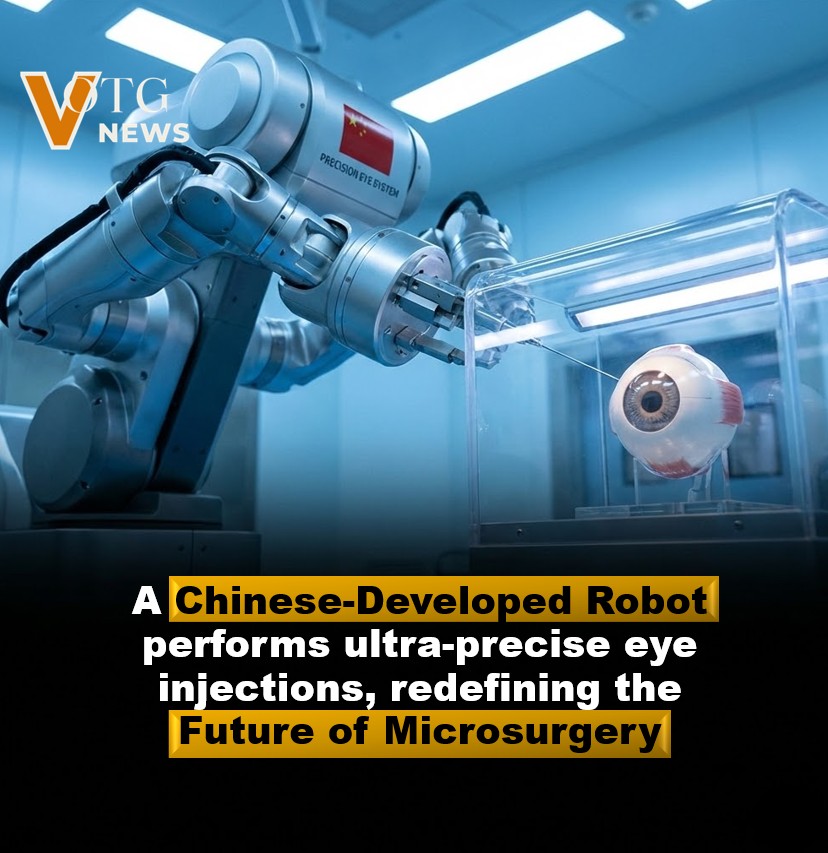
In a major leap forward for medical robotics, Chinese researchers have unveiled an autonomous surgical robot capable of performing extremely delicate eye injections with unprecedented precision. The breakthrough could transform how complex retinal diseases are treated and marks a significant step toward the future of automated microsurgery.
1/22/20262 min read
A New Era for Eye Surgery
The research team, based at the Institute of Automation under the Chinese Academy of Sciences, designed a robotic system specifically for procedures inside the eye — one of the most challenging environments in medicine. Eye injections, particularly those targeting the retina or subretinal space, require micron-level accuracy. Even the slightest hand tremor can lead to complications.
This newly developed robot addresses that challenge by combining advanced imaging, real-time sensing, and intelligent motion planning. Unlike traditional robotic systems that rely heavily on surgeon control, this platform can autonomously plan and execute injections with remarkable stability and accuracy.
Precision Beyond Human Limits
During extensive testing on artificial eye models, isolated animal eyes, and live animal subjects, the robot demonstrated a 100 percent success rate in completing precise eye injections. Researchers reported that its positioning errors were reduced by nearly 80 percent compared with manual procedures performed by experienced surgeons.
The system continuously analyzes the eye’s structure and adjusts its movements in real time, allowing it to operate safely within soft, fragile tissue. This level of precision is especially critical for treatments involving retinal disorders, where damage to surrounding tissue can have permanent consequences.
Why This Matters
Retinal injections are commonly used to treat conditions such as macular degeneration, diabetic retinopathy, and other vision-threatening diseases. These procedures are highly dependent on surgeon skill and years of training. An autonomous system like this could standardize outcomes, reduce surgical fatigue, and potentially make advanced eye care more accessible in regions with limited specialist availability.
Beyond ophthalmology, the technology represents a broader advance in autonomous surgical robotics. It demonstrates that robots can safely perform tasks once thought to be too delicate for machines, opening the door to future applications in neurosurgery and other precision-dependent fields.
Looking Ahead
While the robot is not yet approved for human clinical use, researchers see it as a strong foundation for next-generation surgical systems. With further validation and regulatory approval, autonomous eye surgery robots could one day assist — or even independently perform — some of the most delicate procedures in modern medicine.
Disclaimer: This update is shared based on publicly available information. VOTG News is not responsible for any decisions made based on this news. The image is AI-generated only for illustration