
Controversy Erupts After Indian Chief Minister Pulls Down Doctor’s Hijab at Official Event
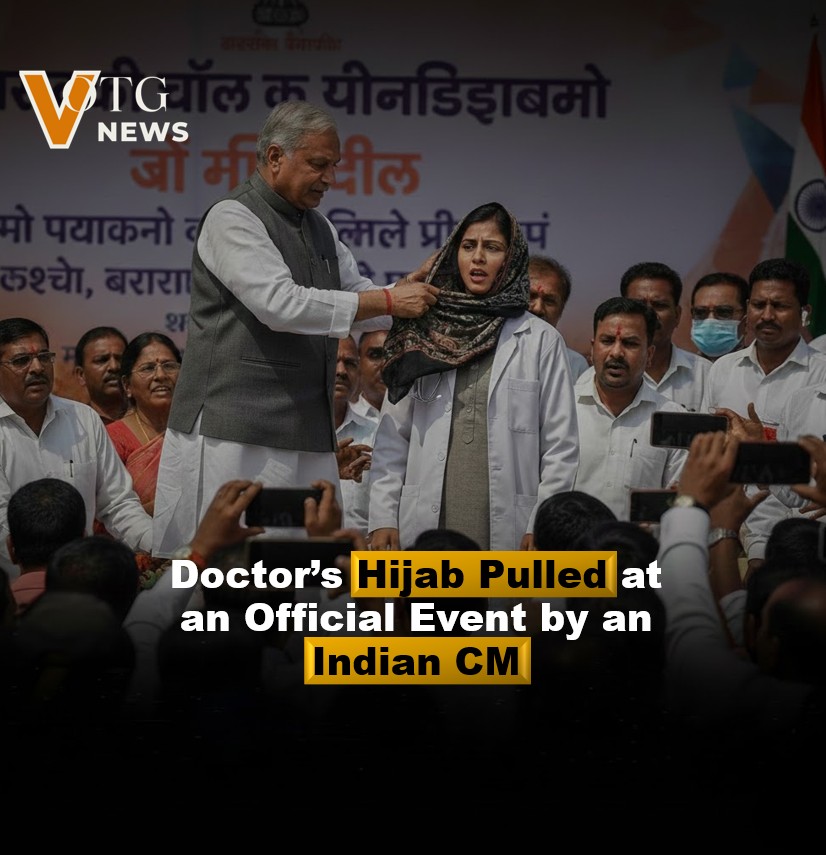
A major political and social controversy has erupted in India following an incident at a government function where a serving chief minister was seen pulling down a woman doctor’s hijab on stage. The moment, captured on video and widely shared on social media, has sparked national outrage and renewed debate on personal dignity, religious freedom, and the conduct of public officials.
12/16/20252 min read
What Happened at the Event
The incident occurred during an official appointment ceremony where newly recruited doctors were being presented with their appointment letters. As the woman doctor stepped forward, the chief minister allegedly gestured toward her headscarf and then pulled it down in full public view, reportedly questioning her attire in the process.
The doctor appeared visibly uncomfortable, and the moment quickly became the focal point of the event, overshadowing its official purpose. Within hours, video clips circulated widely online, drawing sharp reactions from across the political and social spectrum.
Public and Political Backlash
Opposition parties were quick to condemn the act, calling it inappropriate, humiliating, and a violation of personal autonomy. Many leaders described the incident as an abuse of power and demanded a public apology, with some even questioning the chief minister’s suitability to hold office.
Women’s rights advocates, civil society groups, and members of the medical community also expressed anger, emphasizing that no individual—regardless of rank—has the right to interfere with a woman’s personal or religious choices. Several commentators highlighted that the incident was not merely about clothing, but about consent, dignity, and respect in public life.
Prominent public figures and activists echoed these sentiments on social media, describing the act as deeply insensitive and emblematic of a larger problem regarding how authority is exercised over women, particularly those from minority communities.
Defense and Counter-Narratives
Supporters of the chief minister and members of his party offered defenses, suggesting that the action was misunderstood or that there was no malicious intent. Some argued that the gesture was made casually or was meant in a paternal or cultural context.
However, these explanations did little to calm public anger. Critics countered that intent does not negate impact, and that public officials must be held to the highest standards of behavior, especially during formal state functions.
Broader Issues Raised
The controversy has reignited important national conversations, including:
Respect for religious expression in public and professional spaces
Consent and bodily autonomy, particularly for women
Power dynamics between state authority and individual citizens
Accountability of elected leaders for their conduct in public forums
Many observers noted that incidents like this can discourage women—especially from minority communities—from fully participating in public life unless stronger safeguards and cultural accountability are enforced.
Conclusion
As the debate continues, the incident stands as a reminder of the responsibility that comes with public office. Beyond political affiliations, the episode has underscored the need for sensitivity, respect, and clear boundaries in governance.
Whether this moment leads to an apology, policy reflection, or broader institutional change remains to be seen. What is certain, however, is that the video has struck a nerve—forcing the nation to confront uncomfortable questions about power, dignity, and the everyday realities faced by women in public spaces.
Disclaimer: This update is shared based on publicly available information. VOTG News is not responsible for any decisions made based on this news. The image is AI-generated only for illustration