
India’s Sudden Water Release Into the Chenab: Why the Region Is on Edge
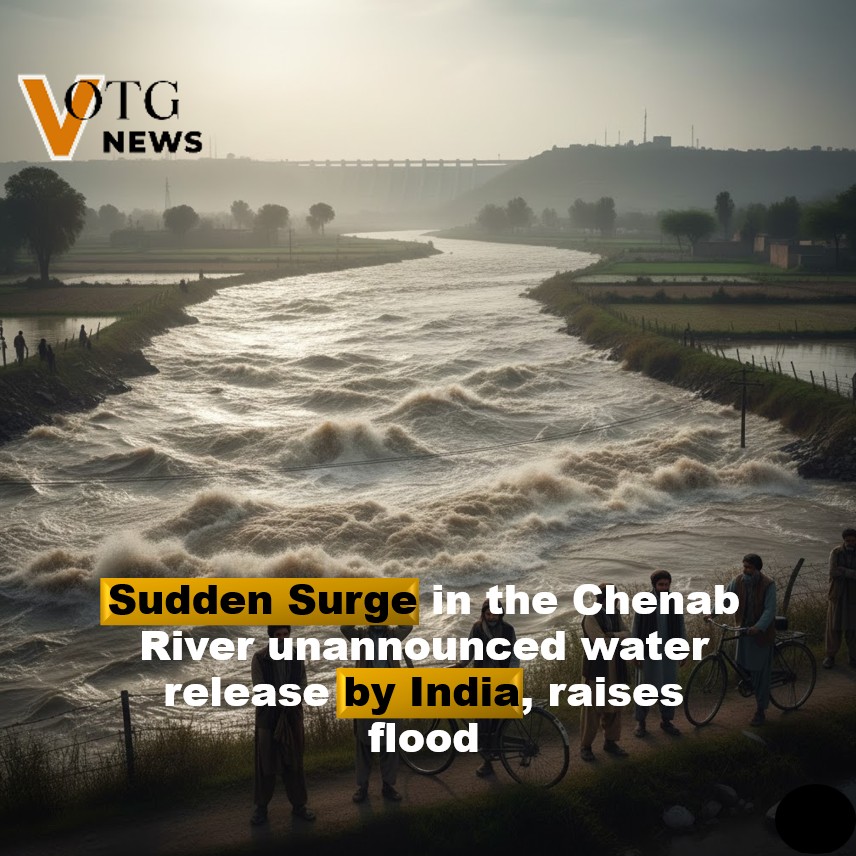
In early December 2025, reports emerged that India had released a large volume of water into the Chenab River without prior notice to downstream authorities. The abrupt surge, which reportedly reached over 58,000 cusecs at one monitoring point, immediately triggered alarms across Pakistan’s riverine and agricultural communities.
12/9/20252 min read
A Sudden Surge Without Warning
Multiple local sources reported that India opened spillways and discharged water into the Chenab after a 24-hour blockage, causing the river flow to spike unexpectedly. Pakistani provincial authorities responded with flood alerts, concerned about potential overflow, damage to standing wheat crops, and risks to low-lying settlements.
In normal circumstances, such releases are communicated in advance under long-established data-sharing mechanisms. But with heightened India-Pakistan tensions and the suspension of the Indus Waters Treaty cooperation framework in 2025, such predictability has eroded.
Why Unannounced Releases Are a Serious Concern
1. Flood Risk
Sudden, significant water surges can lead to flash flooding, particularly in areas where embankments, irrigation systems, and flood channels aren’t prepared for abrupt volume changes.
2. Agricultural Damage
The Chenab supports extensive agricultural activity. When water levels rise rapidly — especially during wheat-planting and early-growth periods — crops can be inundated and destroyed.
3. Loss of Early-Warning Systems
Without the advance hydrological data that once flowed under the Indus Waters Treaty, Pakistani agencies have less time to prepare communities and infrastructure for sudden changes.
4. Escalating Political Sensitivities
Water releases, once treated as routine hydrological management, increasingly carry geopolitical weight. Critics in Pakistan describe the moves as “water aggression,” while some analysts caution against oversimplifying the causes of river surges, noting that climate factors and upstream weather conditions also play significant roles.
A Broader Pattern?
This incident is not isolated. Throughout 2024 and 2025, tensions over trans-boundary rivers have intensified. Each unannounced release adds to fears that water — once considered a shared resource safeguarded by decades of cooperation — is becoming entangled in regional rivalry.
The Chenab flows from India into Pakistan, and historically both countries managed its waters through frameworks meant to prevent precisely this kind of unpredictability. With formal cooperation mechanisms now weakened, both nations face greater uncertainty — and downstream communities face the greatest risks of all.
What Comes Next
Rebuilding trust over shared water resources will require renewed communication, re-establishment of transparent data-sharing, and de-escalation of the political rhetoric surrounding water management. Without that, surprise releases and the fear they generate may continue, placing millions who depend on the Chenab in a state of constant vulnerability.
For now, authorities along the river remain on high alert — watching the water levels closely and hoping that the next major change comes with warning, not surprise.
Disclaimer: This update is shared based on publicly available information. VOTG News is not responsible for any decisions made based on this news. The image is AI-generated only for illustration