
Iran’s Currency Crisis: The Rial Falls to Around 1.3 Million per U.S. Dollar
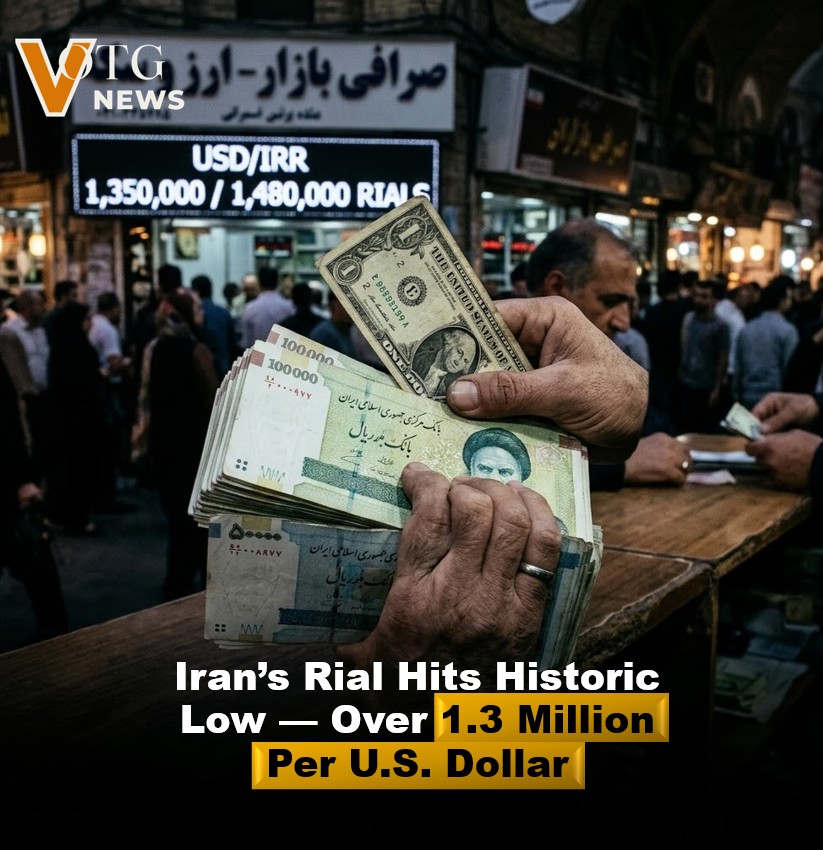
The national currency of Iran—the Iranian rial—has recently plunged to one of the lowest values in its history. Reports from open currency markets indicate that the exchange rate has approached 1.3 to 1.5 million rials for a single U.S. dollar, reflecting the severe economic pressure facing the country. This dramatic drop highlights a deeper financial crisis driven by years of sanctions, inflation, and regional tensions.
3/15/20262 min read
A Decade of Rapid Devaluation
The rial’s fall did not happen overnight. Over the past decade, the currency has steadily lost value against the United States dollar. The difference between earlier exchange rates and today’s figures shows just how dramatic the collapse has been.
YearApproximate Exchange Rate2018~42,000 rials per USD2022~427,000 rials per USD2026~1,300,000 – 1,500,000 rials per USD
In less than ten years, the currency has lost more than 90% of its value, placing immense pressure on the country’s economy and the daily lives of its citizens.
Why the Rial Is Falling
Several major factors have contributed to the currency’s sharp decline.
1. Economic Sanctions
International sanctions—particularly from the United States and its allies—have limited Iran’s ability to trade freely and access global financial systems. This restriction reduces the country’s access to foreign currencies, especially dollars.
2. Persistent Inflation
Iran has experienced years of high inflation. When prices rise rapidly across the economy, the purchasing power of the national currency weakens. This leads to further loss of confidence in the rial.
3. Regional Tensions and Instability
Political tensions and conflict in the region increase uncertainty about the future of the economy. Investors and citizens often seek safer assets during such periods, which can accelerate the decline of a local currency.
4. Public Confidence in the Currency
When people expect their currency to keep losing value, many try to convert their savings into more stable assets such as foreign currency or gold. This behavior can quickly push exchange rates even higher.
Rial vs. Toman: Understanding Iran’s Everyday Currency
Although the official currency is the rial, many people in Iran use tomans in everyday conversation and transactions.
1 toman equals 10 rials
At the current market rate, 1 U.S. dollar is roughly 130,000 to 150,000 tomans
This informal unit makes large numbers easier to manage in daily life.
Impact on Daily Life
For ordinary citizens, the collapse of the rial has significant consequences:
Imported goods become far more expensive
Food and fuel prices rise rapidly
Savings lose value over time
Businesses struggle with unstable pricing
These economic pressures can make everyday life increasingly difficult for households across the country.
Disclaimer: This update is shared based on publicly available information. VOTG News is not responsible for any decisions made based on this news. The image is AI-generated only for illustration