
Maryam Nawaz Announces Agricultural Land for Poor Families in Punjab
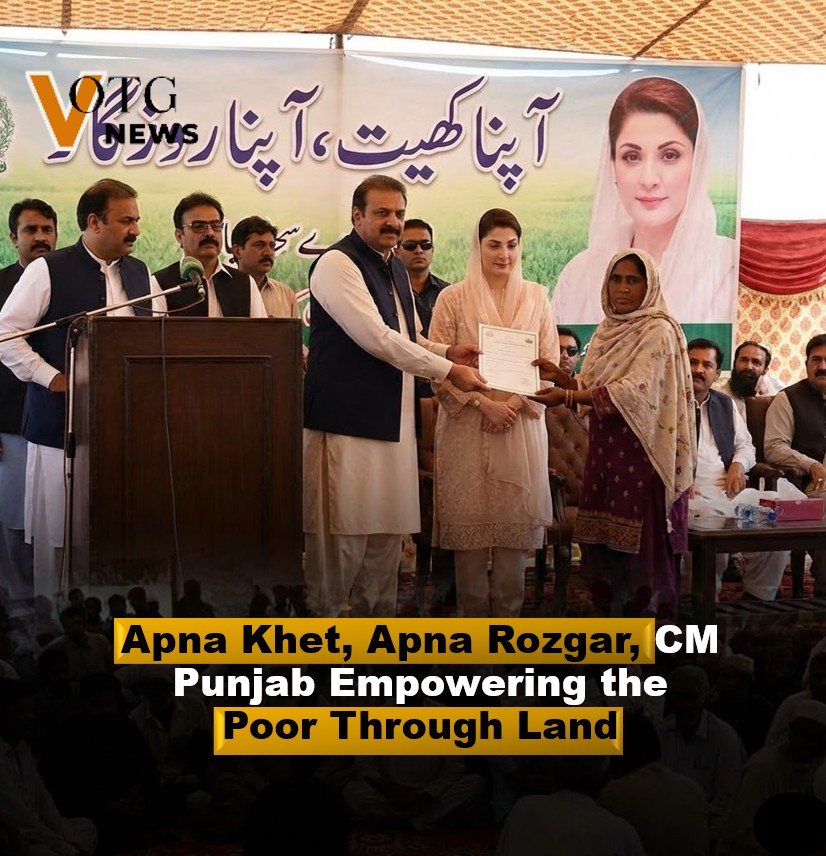
Punjab Chief Minister Maryam Nawaz Sharif has announced a landmark initiative aimed at empowering poor and unemployed citizens through agriculture. The program, titled “Apna Khet, Apna Rozgar” (Own Farm, Own Livelihood), seeks to provide state-owned agricultural land to deserving families, enabling them to earn a sustainable livelihood through farming.
2/5/20261 min read
Land Allocation for the Deserving
Under the scheme, the Punjab government plans to distribute approximately 250,000 acres of agricultural land from state reserves. Eligible beneficiaries are expected to receive between 3 to 5 acres each, allowing families to cultivate crops and become self-reliant.
The program is specifically designed for:
Poor and landless families
Unemployed youth
Individuals willing to engage in farming as a long-term livelihood
Support Beyond Land
In addition to land distribution, the government will provide Kisan Cards to beneficiaries. These cards will help farmers access essential agricultural inputs such as:
Fertilizers
Seeds
Pesticides
Other farming resources at subsidized rates
To further strengthen the agricultural sector, the Punjab government also plans to establish Centres of Excellence in every tehsil, offering technical support, training, and modern farming guidance.
Vision for Rural Uplift
Chief Minister Maryam Nawaz emphasized that the goal of the program is not charity, but empowerment. By enabling people to own and work their land, the government aims to create long-term employment, boost agricultural productivity, and improve living standards in rural areas.
The announcement was made during a public event where the Chief Minister highlighted her government’s broader commitment to healthcare, education, transport, and employment as fundamental rights of citizens.
A Step Toward Economic Stability
“Apna Khet, Apna Rozgar” is being seen as one of Punjab’s most ambitious agricultural welfare programs in recent years. If implemented effectively, it could transform thousands of families from daily wage earners into independent farmers, contributing to both food security and economic stability in the province.
Disclaimer: This update is shared based on publicly available information. VOTG News is not responsible for any decisions made based on this news. The image is AI-generated only for illustration