
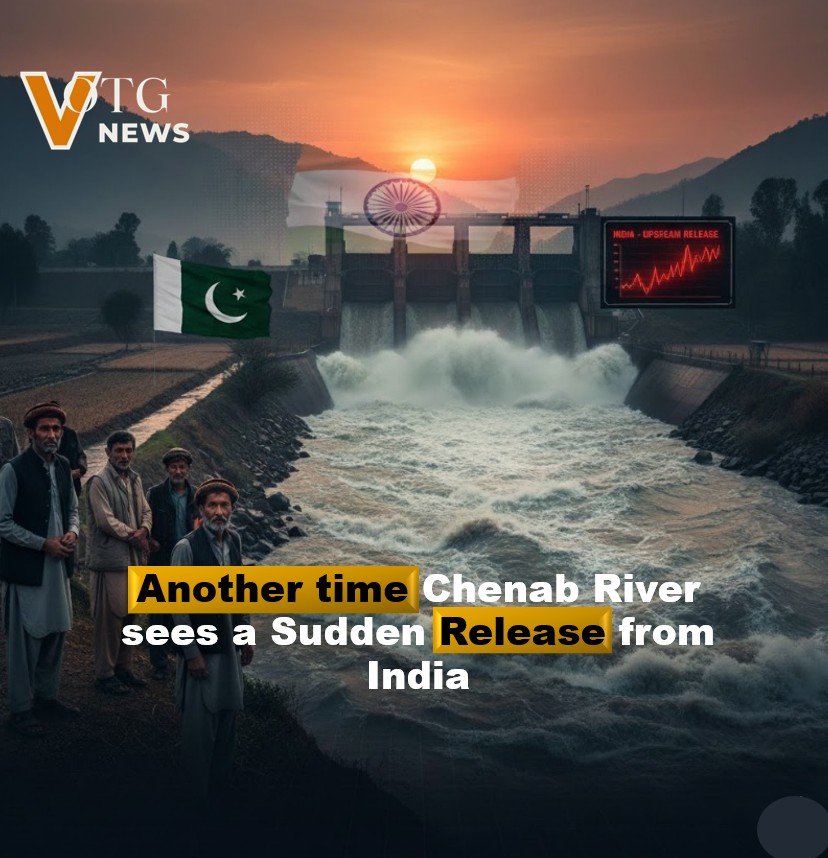
Once Again, India Releases Large Volumes of Water into the Chenab River
According to Pakistani officials, river flows witnessed sudden and sharp fluctuations over a short period. Authorities report that water levels in the Chenab increased rapidly following upstream releases from Indian-controlled structures, before being reduced drastically days later. Such abrupt changes can strain irrigation planning, disrupt agricultural cycles, and heighten flood risks in vulnerable areas.
12/18/20252 min read
Why the Chenab River Matters
The Chenab River is one of the major rivers governed under the Indus Waters Treaty (IWT) of 1960, an agreement between India and Pakistan designed to manage shared water resources and prevent disputes. While India is permitted to use the river for limited purposes such as hydropower generation, the treaty emphasizes coordination, transparency, and advance communication, especially when significant water releases are involved.
For Pakistan, the Chenab plays a vital role in sustaining agriculture, particularly in Punjab, where farming depends heavily on predictable river flows.
Pakistan’s Concerns
Pakistani authorities have expressed alarm over what they describe as unannounced and irregular water releases, stating that these actions complicate water management during a sensitive agricultural season. Officials argue that sudden surges followed by sharp reductions in flow can damage crops, affect livelihoods, and undermine long-term water security.
The matter has reportedly been raised through diplomatic and technical channels, including communication between the respective Indus Water Commissioners, seeking clarification on the reasons behind the releases.
India’s Position
India has not publicly acknowledged wrongdoing, and such releases are often attributed to reservoir management needs, hydropower operations, or changing weather conditions, including rainfall patterns in the Himalayan region. From New Delhi’s perspective, operational decisions are made within allowable limits, though details are not always immediately shared with downstream authorities.
A Growing Sensitivity
Water issues between India and Pakistan have become increasingly sensitive amid broader political tensions. Any perceived deviation from established agreements tends to attract heightened scrutiny, public concern, and diplomatic pressure.
Experts note that while disagreements over interpretation are not new, consistent communication and data sharing remain essential to prevent misunderstandings and avoid unnecessary escalation.
Looking Ahead
As climate variability increases and water resources face growing pressure, the need for predictable river management and cross-border cooperation has never been greater. Observers stress that adherence to established mechanisms, timely information exchange, and technical dialogue are crucial to ensuring that shared rivers like the Chenab continue to support millions of people on both sides of the border.
Disclaimer: This update is shared based on publicly available information. VOTG News is not responsible for any decisions made based on this news. The image is AI-generated only for illustration