
Pakistani Students Turn Fog Into Electricity: A Breakthrough Innovation
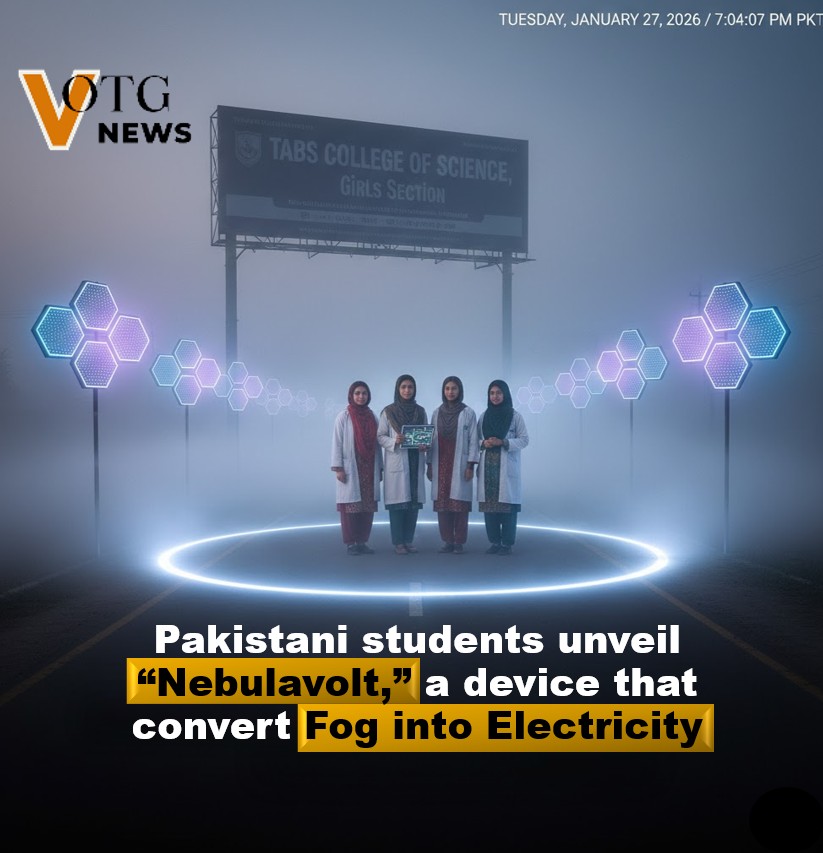
The invention, named “Nebulavolt,” was created by female students from the Girls Section of TABS College of Science in Hyderabad, Pakistan. Their idea addresses two major challenges at once: energy shortages and dangerous low-visibility conditions caused by dense fog.
1/27/20261 min read
How the Device Works
Nebulavolt uses a hydrophilic mesh designed to capture tiny water droplets present in fog. As fog passes through the mesh, the collected droplets interact with specially designed materials that generate an electric charge through triboelectric nanogenerator technology. This process converts the natural motion and contact of water particles into usable electrical energy.
Unlike traditional power sources, this system does not rely on sunlight, wind, or fuel — making it particularly effective during winter months when fog is most common and energy demand is high.
Real-World Applications
The students envision their device being installed in fog-heavy areas, such as highways, rural roads, and industrial zones. The electricity generated could power:
Streetlights
Traffic signals
Roadside warning systems
Small local infrastructure
By improving visibility and reducing reliance on conventional electricity, the technology could help prevent accidents while lowering energy costs and carbon emissions.
National Recognition
The innovation received national attention after winning the Enterprise Challenge Pakistan, a competitive entrepreneurship and innovation program. Judges praised the project for its originality, affordability, and potential for real-world impact, highlighting it as a strong example of sustainable problem-solving.
A Step Toward a Cleaner Future
Nebulavolt shows how local challenges can inspire globally relevant solutions. While the technology is still in its early stages, it opens the door to alternative renewable energy sources that were previously overlooked.
This achievement not only highlights Pakistan’s growing innovation potential but also proves that young minds — especially women in science — are shaping the future of sustainable technology.
Disclaimer: This update is shared based on publicly available information. VOTG News is not responsible for any decisions made based on this news. The image is AI-generated only for illustration