
Supreme Court Clarifies Haq Mehr: A Binding Legal Right, Not a Formality
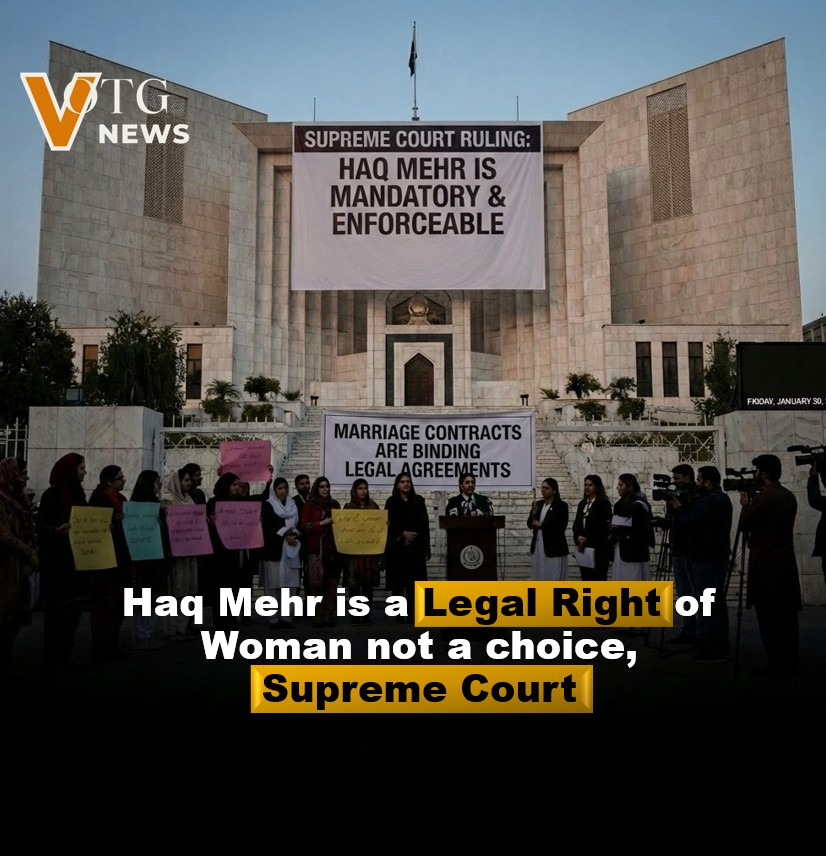
In a landmark move reinforcing women’s financial rights, the Supreme Court of Pakistan has clearly ruled that Haq Mehr (dower) mentioned in the Nikahnama is a mandatory and legally enforceable obligation. The ruling removes long-standing ambiguity and sends a strong message: marriage contracts are not symbolic documents—they are binding legal agreements. The decision was delivered during hearings on multiple petitions related to disputes over Haq Mehr and dowry. Presiding over the bench, Chief Justice of Pakistan Justice Yahya Afridi emphasized that once a marriage is solemnized, the terms written in the Nikahnama must be honored in full.
1/30/20261 min read
What the Court Ruled
The Supreme Court held that:
A husband is legally bound to pay the full Haq Mehr agreed upon at the time of marriage.
Courts should not reduce or alter the amount stated in the Nikahnama simply because one party later considers it excessive.
Any personal agreement freely entered into by the couple at the time of marriage carries full legal weight.
During the proceedings, the court rejected arguments seeking a reduction in the agreed Haq Mehr. In one instance, a husband attempted to pay only half of the gold amount written in the Nikahnama. The Chief Justice made it clear that the court cannot override a lawful agreement, though parties may settle privately if both consent.
Why This Judgment Matters
Haq Mehr is a fundamental right granted to women under Islamic and Pakistani law, yet disputes over delayed or unpaid dower are common. This ruling:
Strengthens women’s financial security in marriage
Discourages casual or unrealistic entries in the Nikahnama
Reinforces the legal sanctity of marriage contracts
Sets a strong precedent for future family law cases
The judgment also highlights the responsibility of families, marriage registrars, and couples to treat the Nikahnama with seriousness and honesty.
A Clear Message from the Supreme Court
The Supreme Court’s stance is unambiguous:
If a man agrees to an amount of Haq Mehr at the time of marriage, he must be prepared to pay it—fully and without excuse.
Disclaimer: This update is shared based on publicly available information. VOTG News is not responsible for any decisions made based on this news. The image is AI-generated only for illustration