
Trump Says China and Russia Can Buy Venezuelan Oil — But Only on U.S. Terms
Former U.S. President Donald Trump has ignited fresh debate in global energy and geopolitics by claiming that China and Russia can buy Venezuelan oil — but only if the United States controls the process. The statement comes amid renewed U.S. efforts to reshape Venezuela’s oil exports, weaken its ties with rival powers, and reassert American influence over one of the world’s largest proven crude reserves. The proposal is bold, controversial, and far from straightforward.
1/10/20262 min read
A New U.S. Approach to Venezuelan Oil
For years, Venezuela’s oil exports have been restricted by U.S. sanctions targeting President Nicolás Maduro’s government. These sanctions pushed Caracas closer to China and Russia, which became major buyers and financiers of Venezuelan crude.
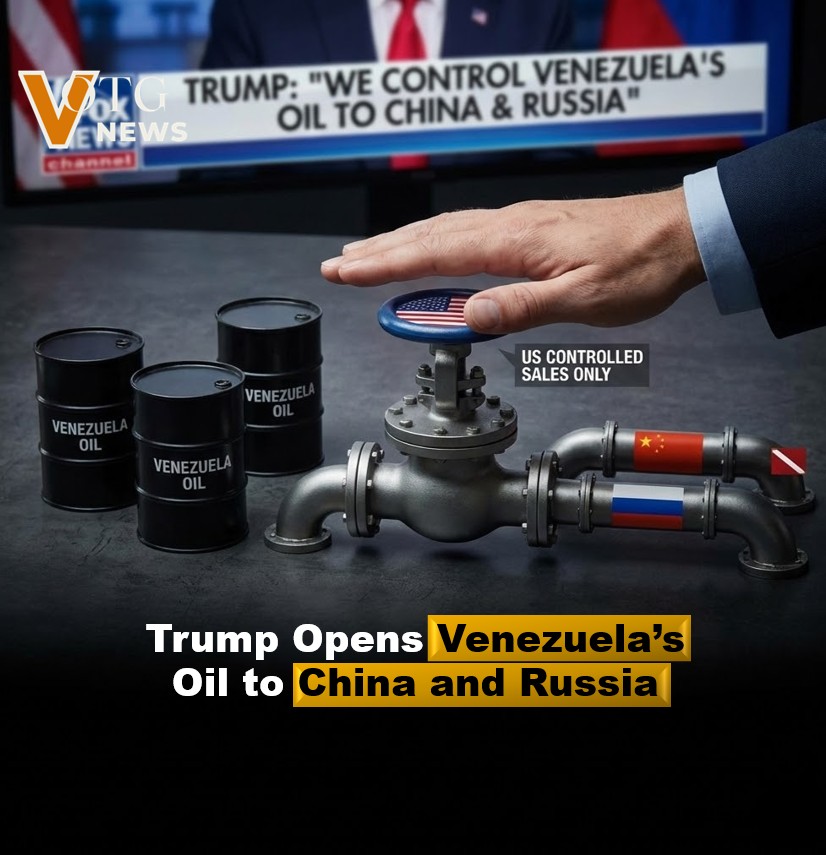
Trump’s latest messaging flips that dynamic. Instead of blocking sales outright, the U.S. would position itself as the gatekeeper — overseeing how Venezuelan oil is sold, who buys it, and under what conditions. In this framework, even geopolitical rivals like China and Russia would be allowed to purchase Venezuelan oil, but only through U.S.-approved channels.
In effect, Washington would control the flow of oil rather than simply trying to shut it down.
What “Under U.S. Control” Really Means
The phrase “under U.S. control” is key. It does not suggest free-market access for China or Russia. Instead, it implies:
Sales structured or approved by the U.S. government
Payments routed through systems compliant with U.S. sanctions
Limited or indirect involvement of Chinese and Russian state companies
Reduced political and financial support flowing to the Maduro government
Major international commodity traders have reportedly been asked to help manage and sell Venezuelan crude under this emerging framework, reinforcing the idea that the U.S. wants oversight, not isolation.
Tensions With China and Russia
While Trump has publicly suggested that China and Russia can participate, the reality is complicated.
China has already scaled back some Venezuelan purchases in recent years due to sanctions risk, shipping disruptions, and financial uncertainty. Many Chinese refiners have turned to alternative suppliers rather than navigate U.S. restrictions.
Russia, meanwhile, has reacted angrily to U.S. tanker seizures and enforcement actions tied to Venezuelan oil shipments. From Moscow’s perspective, U.S. control over Venezuelan exports looks less like cooperation and more like confrontation.
Both countries face a difficult choice: accept U.S. terms and oversight, or look elsewhere for oil.
Pressure on Venezuela
Trump’s strategy also includes pressure on Caracas to reduce or eliminate Chinese and Russian influence in its oil sector and realign more closely with the United States. This would represent a dramatic shift for Venezuela, which has relied heavily on Beijing and Moscow for loans, technology, and diplomatic backing.
Whether Venezuela would willingly accept U.S. dominance over its most valuable resource remains an open question.
Impact on Global Oil Markets
The uncertainty surrounding Venezuelan oil has already added volatility to global energy markets. Any change in how Venezuelan crude is sold — especially if it disrupts flows to China — can affect prices, shipping routes, and supply balances.
If the U.S. successfully restructures Venezuelan exports, it could:
Reduce China’s access to heavy crude
Weaken Russia’s role in Latin American energy
Increase U.S. influence over global oil trade without directly increasing production
The Bigger Picture
Trump’s comments highlight a broader shift in how sanctions and energy policy are being used. Rather than simply banning trade, the U.S. appears to be experimenting with controlled access — allowing rivals to buy resources, but only on American terms.
Disclaimer: This update is shared based on publicly available information. VOTG News is not responsible for any decisions made based on this news. The image is AI-generated only for illustration